
REQUEST AN APPOINTMENT
LET'S CONNECT NOW
Schedule your no obligation consultation by fill out the form below.

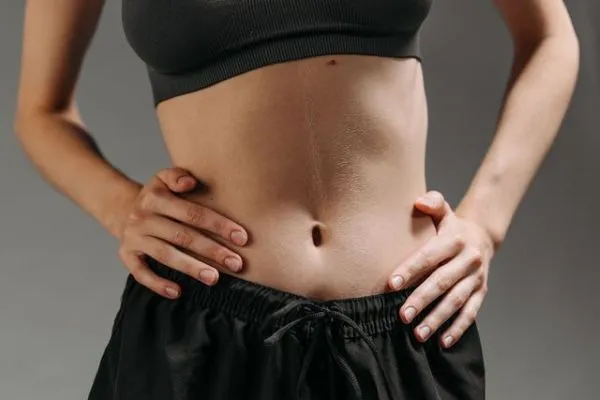
A protruding or “pooching” abdomen does not always mean excess belly fat. Diastasis recti, loose skin, abdominal fat and other factors can all contribute to the appearance of a larger stomach.
Belly fat is excess fatty tissue stored around the abdomen. Diastasis recti is a separation or widening between the two sides of the rectus abdominis muscles, often associated with pregnancy but possible in other circumstances too.
Both can make the abdomen look more prominent, and some people can have both diastasis recti and excess abdominal fat. This is why simply looking at your stomach may not tell you what is causing the bulge.
| Feature | Diastasis Recti | Belly Fat |
|---|---|---|
| What is it? | Separation or widening of the abdominal muscles | Excess fatty tissue around the abdomen |
| Common appearance | Central bulge or “doming,” sometimes more noticeable when the abdominal muscles contract | General fullness or increased abdominal fat |
| Common association | Pregnancy is a common cause, but it can occur in others too | Weight gain, genetics, hormones, lifestyle and other factors |
| Primary approach | Appropriate core rehabilitation; surgery may be considered in selected cases | Nutrition, physical activity and, for selected patients, body-contouring procedures |
Diastasis recti occurs when the two sides of the rectus abdominis muscles become separated or widened along the midline of the abdomen. The connective tissue between these muscles, called the linea alba, can become stretched and less able to bring the muscles back together.
Pregnancy is a common situation in which this occurs because the growing uterus places increasing pressure on the abdominal wall. However, diastasis recti is not limited to women who have been pregnant and can occur in other people as well.
Abdominal stretching during pregnancy is a common contributor.
Repeated or excessive strain can contribute in some individuals.
The central abdominal muscles become more widely separated than usual.
Possible signs include:
Important: These signs do not prove that you have diastasis recti. A healthcare professional can assess the abdominal wall and determine whether muscle separation is present.
Belly fat refers to excess fat stored around the abdominal region. Some of it is located directly underneath the skin, while deeper abdominal fat surrounds internal organs.
Abdominal fat can increase with overall weight gain, changes in activity levels, age, genetics, hormonal factors and other individual factors. The amount and distribution of body fat also vary significantly from person to person.
This is where things can become confusing. A person can have a soft, protruding abdomen because of excess fat, muscle separation, loose skin or a combination of these factors.
These are clues rather than a diagnosis. If you are unsure, an examination by an appropriately trained healthcare professional is more useful than trying to judge the cause from appearance alone.
Some healthcare resources describe a simple self-check in which a person lies on their back with knees bent, slightly lifts the shoulders and feels along the midline of the abdomen for a separation.
However, a home check should be treated only as a screening step, not a diagnosis. The width, location and tension of the abdominal wall all matter, and a healthcare professional can assess these more accurately.
Losing body fat does not necessarily make every cause of abdominal protrusion disappear.
Some abdominal fat may remain even after significant weight loss.
Diastasis recti can contribute to a persistent central bulge.
Major weight loss or pregnancy can leave excess abdominal skin.
Hernias and other abdominal conditions can sometimes produce a bulge.
Exercise can play an important role in managing diastasis recti. Appropriate core rehabilitation and controlled movements may help improve abdominal function and strength.
However, not every abdominal exercise is appropriate for every person. Exercises that cause pronounced bulging or doming of the abdominal wall may need to be modified or avoided, particularly when the condition is symptomatic.
If you suspect diastasis recti, consider getting guidance from a qualified physiotherapist or healthcare professional before starting an intensive abdominal workout programme.
A tummy tuck, or abdominoplasty, is different from weight-loss treatment. It is a surgical body-contouring procedure designed to improve the abdominal contour by removing selected excess skin and fat and, when appropriate, tightening or repairing the abdominal wall.
This can be relevant for selected patients who have significant loose abdominal skin, persistent abdominal contour concerns and/or muscle separation that has not adequately improved with non-surgical management.
Can address selected excess skin and may involve tightening separated or weakened abdominal muscles.
Primarily removes localized deposits of fat and is intended for body contouring rather than repairing muscle separation.
In some patients, procedures may be combined, depending on anatomy, health, goals and the surgeon's assessment. A consultation is needed to determine which approach, if any, is appropriate.
If your concern is mainly abdominal contour, you may also want to explore:
If you have a persistent abdominal bulge after pregnancy, weight loss or major changes in body shape, the first step is understanding what is actually contributing to it.
At Inform Clinic, an individual assessment can help distinguish concerns such as localized fat, loose skin and abdominal muscle separation and determine whether non-surgical management, liposuction, tummy tuck or another approach may be appropriate.
Schedule a ConsultationNo. Diastasis recti involves separation or widening of the abdominal muscles, while belly fat refers to excess fatty tissue. They can occur together and may both contribute to abdominal protrusion.
Yes. Diastasis recti is not simply a weight-related condition. It can occur in people who are otherwise at a healthy weight, particularly after pregnancy or significant abdominal stretching.
Remaining abdominal fat, loose skin, muscle separation and other factors can all contribute. If the bulge persists despite weight loss, a clinical assessment can help identify the cause.
Appropriate core rehabilitation can improve abdominal strength and function and may reduce the separation in some people. The right exercises depend on the individual, so professional guidance can be useful.
Liposuction primarily removes localized fat. It does not repair separated abdominal muscles. If muscle separation is present, a different treatment plan may be needed.
In appropriately selected patients, abdominoplasty may include tightening or repair of separated abdominal muscles as well as removal of excess skin and, when appropriate, fat. Whether surgery is suitable depends on individual anatomy and goals.
No. A postpartum abdomen can remain prominent for many reasons, including normal changes after pregnancy, body-fat distribution, loose skin and muscle separation. A professional assessment is the best way to determine the cause.
Consider an evaluation if the bulge persists, becomes painful, is associated with weakness or functional problems, or you are unsure whether it represents fat, muscle separation, a hernia or another condition.
If your stomach continues to protrude after pregnancy or weight loss, understanding whether the cause is fat, loose skin, muscle separation or a combination is the first step toward choosing an appropriate treatment.
Talk to Inform Clinic


